As AI makes creation abundant, what cannot be manufactured becomes invaluable.
I’ve been building brands since Netscape was still being built in a computer lab in the cornfields of Illinois.
I watched the dot-com boom turn unknown companies into category leaders almost overnight. I watched the crash erase most of them just as quickly. Then I watched banner ads become search, search become social, social become mobile, and mobile dissolve into the algorithmic feed.
Every era arrived the same way: new tools, new promises, and a very confident announcement that the old rules no longer applied.
The tools kept changing. The rules never did.
Clarity. Authenticity. Imagination.
They survived because technology can transform how a brand reaches people — it has never once changed what makes people remember it, trust it, or choose it. No platform has ever invented a shortcut around human feeling. Believe me, plenty have tried.
Now we’re in the AI era — the most powerful age of production the world has ever built. Ideas generate instantly. Campaigns assemble in hours. Products, content, and entire visual identities replicate at a speed that would have felt like science fiction two years ago.
The result won’t be a shortage of good work.
It’ll be an ocean of it.
And when competent execution is available to everyone, competence stops being an advantage. It becomes the floor. Table stakes. The cost of showing up.
Here’s what I’ve learned in the rooms where the real work happens: the machine is extraordinary at more. It is useless at why. It can render a thousand variations of an idea and cannot tell you which one will make someone’s chest tighten. It has no childhood. No scar tissue. No weird, specific memory of a summer that turns into the one line nobody else could have written.
That’s still our job. That’s still the whole job.
So we don’t resist the tools — we run at them. We use the best of what’s available, for exactly the right task, without apology. AI-enabled, human-led. The machine handles velocity, iteration, the unglamorous scale. The humans hold the taste, the tension, the instinct that says no, not that one — this one. Craft on top of compute.
That partnership is where the leverage lives. Not in choosing between human and machine, but in refusing to let either one do the other’s work.
But distinction alone doesn’t compound. Commitment does.
This is the part most organizations underestimate. A brilliant idea, launched once and quietly abandoned, is an expense. The same idea, executed with discipline across years, becomes an asset on the balance sheet.
Brand equity is not created in a launch window. It is accumulated — through sustained investment, sustained energy, and campaigns that arrive with genuine force rather than obligation. Impactful ideas earn attention. Consistent ideas earn memory. And memory, compounded over time, is what eventually earns preference, pricing power, and margin.
The discipline is deceptively simple and genuinely difficult: hold the same strategic position long enough for the market to learn it. Express it with enough freshness that audiences never tire of it. Resist the internal boredom that kills strong platforms years before the public ever grows weary of them. Most brands don’t fail because their idea was wrong. They fail because they changed it before it had a chance to work.
AI has made the first draft cheap. It has done nothing to make endurance easier. If anything, it raises the premium on organizations willing to sustain a point of view while competitors chase the next format every quarter.
Momentum is the strategy. Longevity is the moat.
Because the more creation becomes automated, the more valuable genuine distinction becomes — and the more valuable it becomes to keep showing up as the same recognizable thing. Imagination isn’t a soft asset anymore. It’s the scarce one. Authenticity isn’t a brand value on a slide — it’s the only thing left that can’t be generated, copied, or prompted into existence. And consistency is the mechanism that turns both of them into equity.
That’s the real story.
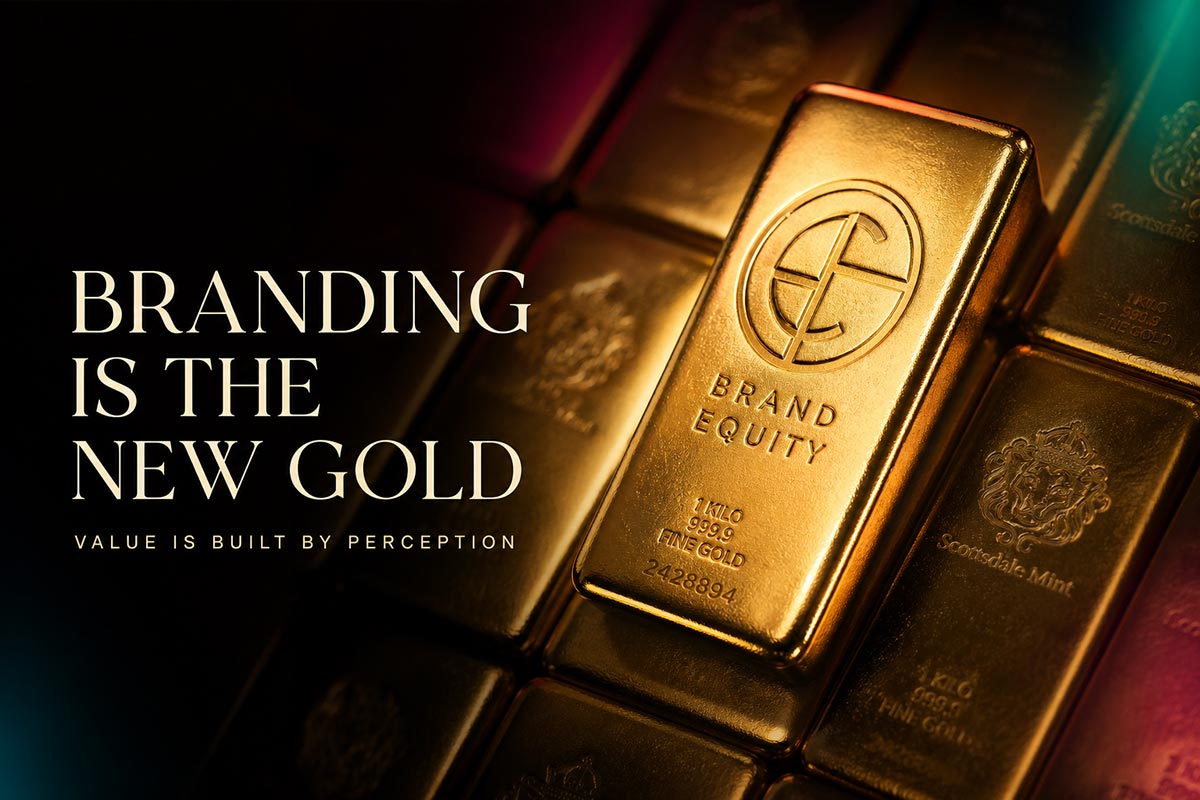
And that’s why brands are the new gold.